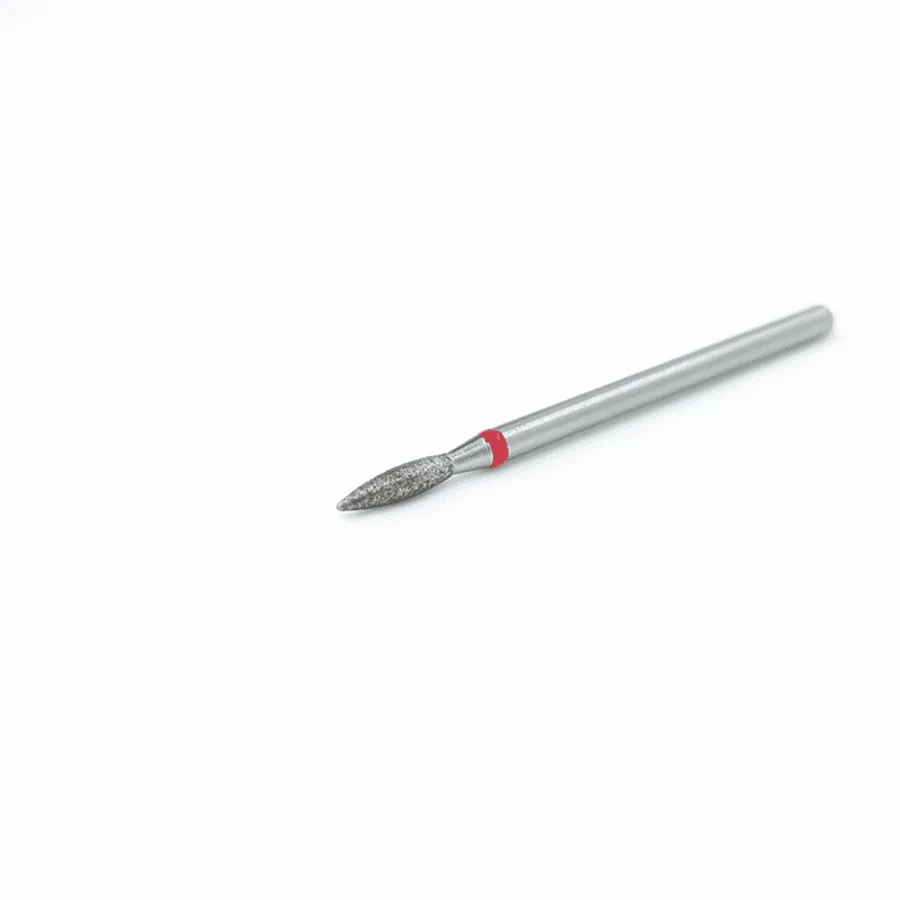
When people search for e-file bits for natural nails, the most important point is this: natural nails should be approached more gently than enhancement removal. The safest bits are usually chosen for cuticle work, sidewall cleaning, and light finishing, not for aggressively filing down the natural nail plate itself.
That is why professional nail techs usually separate their bit choices into two groups. One group is for prep and detail work around natural nails, and the other is for product removal. Mixing those up is where problems often begin.
The safest starting point is usually a fine diamond bit
For natural nails, fine diamond bits are usually the safest place to start. Diamond bits are commonly used for dry manicure prep, refining the cuticle area, cleaning sidewalls, and removing non-living tissue with control.
They are generally preferred over carbide bits for this kind of work because they are made for detailed, surface-level refinement rather than fast bulk removal. If your aim is to work neatly around natural nails, a fine diamond bit is usually a more suitable choice than an aggressive removal bit.
Good examples from our range include the Flame E File Nail Drill Bit Size 2.1mm Red, the Flame E File Nail Drill Bit Size 1.8mm, and the Rounded Cone E File Nail Drill Bit Size 1.8mm.
Which shapes are usually considered safest?
Shape matters just as much as grit. A good natural nail bit should give you visibility, control, and a stable point of contact around the cuticle area.
Flame bits
Flame bits are one of the most commonly used shapes for natural nail prep and dry manicure work. Their profile helps reach the sinus area, lift the cuticle carefully, and clean sidewalls with precision.
For many nail techs, a fine flame bit is the most practical everyday option for natural nail prep. Our Flame E File Nail Drill Bit Size 2.3mm and Flame E File Nail Drill Bit Size 2.3mm Fine are good examples of that style.
Ball bits
Ball bits are usually used after lifting the cuticle, not for lifting it. They are useful for tidying loosened non-living tissue and refining the cuticle area with a light touch.
That makes them a common follow-up bit for natural nail manicure work. Examples include the Ball E File Nail Drill Bit Size 3.1mm and Ball E File Nail Drill Bit Size 4.0mm Red.
Rounded cone and small cone bits
Rounded cone shapes are often chosen when a nail tech wants something controlled and slightly more forgiving. They can be useful for detail work around the cuticle zone and sidewalls without feeling too bulky.
If you want a softer profile for controlled natural nail prep, the Rounded Cone E File Nail Drill Bit Size 1.8mm is a sensible shape to look at.
What grit is safest for natural nails?
In most cases, fine grit is the safer choice for natural nail work.
That is why red-ring bits are so commonly used for prep around natural nails in many systems. They are usually chosen where the work needs to be controlled and delicate. Blue bits are often medium grit and may still be used by experienced techs, but they are usually better treated with more caution.
One important point: colour coding is not perfectly universal across every brand. In professional practice, red often indicates fine and blue often indicates medium, but you should always judge the bit by the manufacturer’s description as well as the ring colour.
For natural nails, a practical rule is:
- choose fine grit for cuticle and sidewall work
- use medium grit only when you are confident it suits the service
- avoid coarse or aggressive bits on the natural nail plate
What should usually be avoided?
If the goal is safe work on natural nails, a few bit types should be treated very carefully or avoided altogether for direct plate work.
Aggressive carbide bits
Carbide bits are usually designed for product removal, not natural nail prep. They are ideal for reducing gel, acrylic, or other enhancement material, but they are generally not the first choice for working directly on natural nails.
That is why products such as the Carbide E File Nail Drill or left-handed carbide removal bits are better suited to enhancement removal rather than routine natural nail prep.
Coarse grit bits
A coarse bit removes material faster, which is exactly why it is riskier on a natural nail. If used in the wrong area or with too much pressure, it can remove more than intended.
Treating the natural nail like enhancement material
Natural nails are not acrylic or hard gel. The safest e-file work around natural nails usually focuses on the surrounding prep area, not on aggressively thinning or filing the natural nail surface.
A safe basic bit combination for natural nail work
For many professional services, a sensible natural nail setup often looks like this:
- a fine flame bit for lifting and cleaning around the cuticle
- a ball bit for removing loosened non-living tissue
- a rounded cone for controlled refinement where needed
- a light finishing or polishing bit only when suitable for the service
If you want to explore a practical starting range, our Most Essential 20 E File Nail Drill Bits Set For the Manicure And Pedicure is useful because it helps you compare several common professional shapes in one set.
For finishing work, softer options such as the Stone Polishing E File Drill Bit or Silicone Polishing E File Drill Bit Red Medium make more sense than aggressive removal bits.
Final thoughts
The safest e-file bits for natural nails are usually the ones that support careful prep work rather than fast removal. Fine diamond bits, especially in flame, ball, and rounded cone shapes, are generally the most suitable options for professional work around natural nails.
The key is not just choosing a popular bit. It is choosing a bit that matches the service, the area you are working in, and the amount of control required. Fine grit, light pressure, and the right shape are usually far safer than trying to make one aggressive bit do everything.
If you are building a natural nail prep kit, start with a fine flame bit, add a ball bit, and then expand with a rounded cone bit or a gentle polishing bit depending on the type of services you offer.