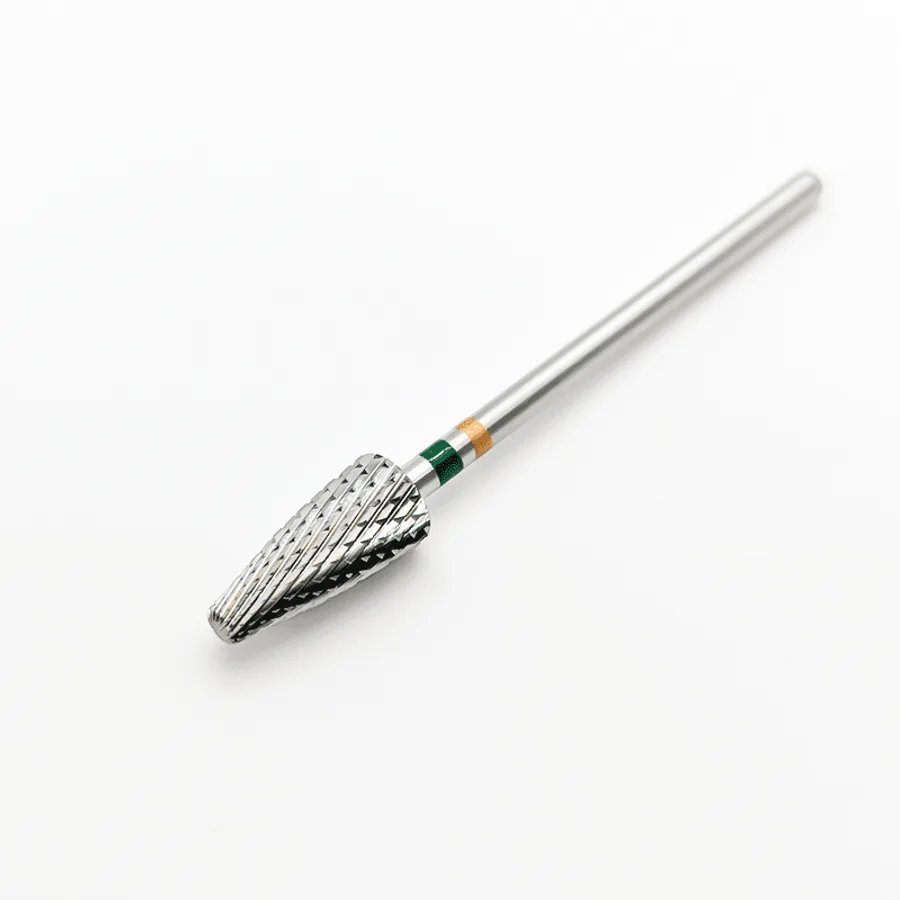
If you are left-handed and have ever tried removing gel or acrylic with a standard carbide bit, you will probably already know the problem. The bit may still remove product, but it often does not feel quite right. You can end up adjusting your wrist, working at a strange angle, or feeling like the bit is fighting your natural movement instead of working with it.
That is exactly why left-handed carbide drill bits exist.
They are not a gimmick and they are not simply standard bits renamed for marketing. A proper left-handed carbide bit is cut in the opposite direction to a right-handed one, so the bit works correctly when a left-handed technician uses their natural hand movement. That difference matters more than many people realise, especially if you do a lot of removal work.
What is actually different about a left-handed carbide bit?
The main difference is the direction of the flutes, or cutting edges.
A standard right-handed carbide bit is designed to cut efficiently when it rotates in the direction a right-handed nail tech would normally use for safe product removal. A left-handed carbide bit reverses that cutting pattern so it performs correctly for a left-handed user.
In practice, this means the bit feels smoother, more controlled, and more predictable in the hand. Instead of forcing the drill to work against your natural motion, the bit supports it. That can make a very noticeable difference when you are removing builder gel, hard gel, polygel, or acrylic for long periods during the day.
This is the reason a left-handed tech often feels immediate relief when switching to a true left-handed carbide removal bit. The pressure feels more even, the contact is more stable, and the bit tends to glide through product more cleanly.
Who actually needs one?
Not every left-handed person will feel the need straight away, but many professional left-handed nail techs do benefit from them.
You are most likely to need a left-handed carbide bit if:
- you are naturally left-handed and work mainly with your left hand
- you remove a lot of gel, hard gel, or acrylic every week
- you notice awkward wrist positioning with standard carbide bits
- you feel like product removal takes longer than it should
- you get inconsistent cut or chatter when refining the surface
If you only use an e-file occasionally, you might manage with a standard bit for some tasks. But if e-file removal is part of your daily salon work, using the correct directional bit is usually the better choice.
For many techs, it is less about whether a right-handed bit can work and more about whether it is the most efficient, comfortable, and controlled option. In professional work, that difference matters.
Why the wrong direction feels uncomfortable
When the cut direction is wrong for the hand you are using, you often compensate without realising it. You may tilt the handpiece differently, apply extra pressure, or work in shorter, less fluid passes. Over time, that can lead to unnecessary strain and less confidence during removal.
Using the correct left-handed bit helps the drill remove product in a way that feels natural rather than forced. That usually improves:
- wrist comfort
- control over the contact point
- smoothness across the nail surface
- speed of bulk removal
- confidence when working close to the product layer you want to leave
That is why left-handed carbide bits are especially popular for removal work rather than fine cuticle prep. Carbide bits are generally used for taking down product, and that is exactly where directional comfort becomes obvious very quickly.
What are they best used for?
Most left-handed carbide bits are chosen for product removal and refinement rather than natural nail prep.
Typical uses include:
- removing builder gel
- removing hard gel
- reducing acrylic bulk
- taking down polygel
- refining the surface of enhancements
- shortening or reshaping extensions
For example, our Left Handed - Carbide E file nail drill bit green for gel, acrylic removal is a strong all-round option for professional removal work. If you prefer a different grit level, the Left Handed Carbide Bit Blue and Left Handed Carbide Bit Red give you softer or finer options depending on how aggressively you want to work.
If your work regularly involves heavier product reduction, the Left Handed Carbide Bit Green is one of the most useful starting points.
Does grit still matter?
Yes, absolutely. Left-handed or right-handed, grit still changes how the bit behaves.
The hand orientation tells you the direction the bit is designed to cut. The grit tells you how aggressively it removes product.
That means you still need to choose the bit according to the service:
- finer grit for more controlled refinement
- medium grit for balanced removal and smoothing
- coarser grit for faster bulk reduction
You should not choose a left-handed carbide bit only because it is left-handed. You still need the right level of aggression for the material you are removing and the stage of the service you are in.
Is a left-handed bit better for every left-handed tech?
Usually, it is better for removal work, but the answer depends on how you use your e-file.
Some left-handed techs have adapted so strongly to right-handed bits that the switch can feel unfamiliar at first. That does not mean the left-handed bit is wrong. It usually just means your muscle memory has been built around a workaround.
If you are trying one for the first time, give yourself a little time to adjust. Most techs notice the benefit in smoothness and control quite quickly once they stop compensating with the wrist.
Final thoughts
The simplest way to think about left-handed carbide drill bits is this: they are made to let a left-handed technician work in a more natural, efficient, and comfortable way.
The difference is not cosmetic. It is in the cut direction, and that changes how the bit behaves on the nail surface during removal. If you regularly remove gel, acrylic, or polygel with your left hand, a proper left-handed carbide bit is usually worth having in your working kit.
If you want to compare a few options, start with our Left Handed Carbide Bit Green, Left Handed Carbide Bit Purple, and Left Handed Carbide Bit Red. You can also browse the full shop if you want to build a more complete professional e-file setup.