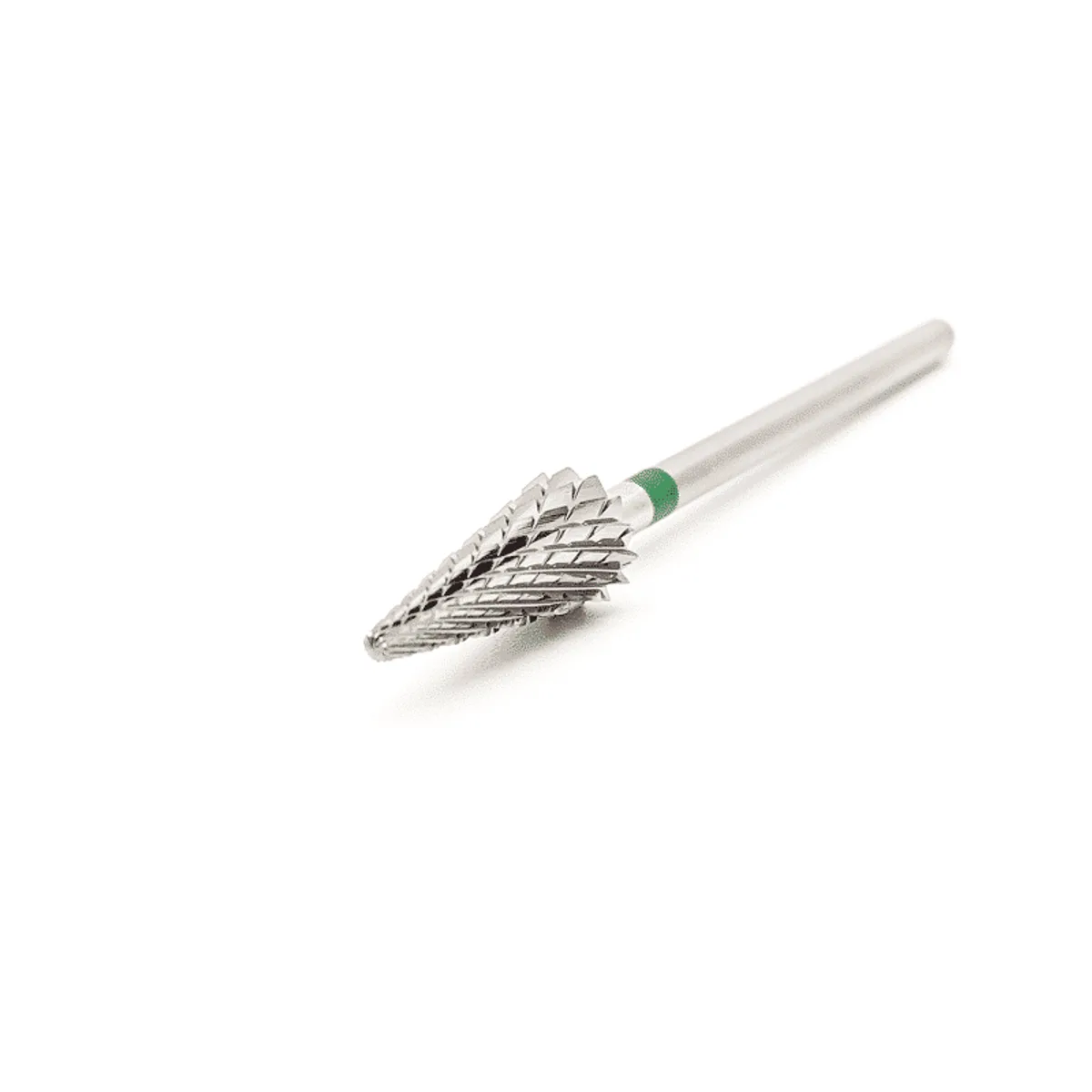
Removing gel polish, hard gel, polygel, or acrylic is a different job from manicure prep. The bit needs to reduce product efficiently without being treated like a cuticle bit. That is why removal work usually calls for carbide e-file bits.
Searches like drill bit to take off acrylic nails, acrylic nail drill bits, e file bit for removing gel polish, and carbide nail drill bits are all connected to the same topic: which bit should you use for product removal?
The short answer is usually carbide, chosen in the correct shape and grit for the service.
Why carbide bits are used for removal
Carbide nail drill bits are made to cut through product. Unlike diamond bits, which are usually used for prep and refinement, carbide bits are designed for reducing enhancement material.
Carbide bits are commonly used for:
- removing gel polish
- reducing hard gel
- removing acrylic or polygel
- shortening product
- refining enhancement surfaces
- rebalancing product during maintenance
This makes carbide one of the most important bit types for nail techs who regularly work with overlays, extensions, or structured gel.
You can browse our Carbide Bits category or view the Carbide E File Nail Drill as a practical removal option.
Are carbide bits better than diamond for removal?
For product removal, carbide is usually the better choice. Diamond bits are more suitable for manicure prep, cuticle-area work, and controlled surface refinement.
That does not mean carbide should be used carelessly. It means the material is better suited to removal when used by a trained professional with correct technique.
A simple comparison:
- diamond bits for prep and detail work
- carbide bits for gel, acrylic, and bulk removal
- polishing bits for finishing and smoothing
If you want the material comparison in more detail, read Diamond, Carbide or Ceramic? Choosing the Right E-File Bits Material.
Barrel carbide bits for product reduction
Barrel carbide bits are popular because the wider shape gives a stable contact area. They are often used to reduce bulk from enhancement material and refine the surface.
Barrel carbide bits can be useful for:
- reducing product thickness
- smoothing enhancement surfaces
- shortening product
- working over larger areas
For this shape, see the Barrel Carbide E File Nail Drill Bit and Barrel Carbide E File Nail Drill Bit.
Cone or tapered carbide bits
Some carbide bits have a more tapered profile. These can be useful when a tech wants more control around product edges or smaller areas.
The key is to remember that material still matters. A tapered carbide bit is still a removal bit. It should not be treated the same way as a diamond cone bit used for manicure prep.
Use tapered carbide shapes when you need:
- more controlled product reduction
- access around smaller enhancement areas
- refinement where a wide barrel feels too bulky
Left-handed carbide bits
Left-handed nail techs may prefer left-handed carbide bits because the cutting direction is designed for left-hand use. This helps the bit cut more naturally when used in the correct working direction.
These are especially relevant for searches like left handed carbide drill bits, left hand carbide drill bits, and left handed nail drill bit.
You can compare our Left Handed category, including left-handed carbide options for gel and acrylic removal.
What about ceramic bits?
Ceramic bits are often discussed as an alternative removal material. Some technicians like the feel of ceramic during removal, but ceramic is not automatically better than carbide.
For many professional services, carbide remains a reliable and predictable choice for product removal. The right choice depends on your technique, the product being removed, and the bit shape.
For most efileBits product targeting, carbide is the cleaner match for gel polish removal, hard gel removal, acrylic removal, and product reduction terms.
Do not use removal bits for everything
One common mistake is using a removal bit for prep work just because it fits the handpiece. A carbide bit can remove product efficiently, but that does not make it the right choice for cuticle-area detail work.
For prep, choose diamond flame, ball, cone, or rounded cone bits. For removal, choose carbide. For finishing, choose polishing bits.
That separation makes the service more controlled and helps each bit do the job it was designed for.
Final thoughts
The best nail drill bits for removing gel polish, acrylic, hard gel, and polygel are usually carbide bits. They are designed for product reduction and removal, while diamond bits are better suited to prep and detail work.
If you want one removal-focused place to start, browse Carbide Bits or compare the Carbide E File Nail Drill with barrel carbide options for broader surface work.