If you are new to professional e-file work, one of the most confusing parts is often the bits themselves. There are many shapes, different grit colours, and each bit is designed to do a very specific job. Once you understand the basic purpose of each one, choosing the right bit becomes much easier.
In simple terms, an e-file bit is the working head that fits into your electric nail drill. The shape, size, and grit of that bit determine how it performs on the nail, on product, and around the cuticle area. A good bit should help you work accurately, efficiently, and with as little unnecessary pressure as possible.
Diamond bits and carbide bits are not the same
One of the first things to understand is the difference between diamond bits and carbide bits.
Diamond bits are usually used for manicure and cuticle work. They are ideal for refining the cuticle area, cleaning the sidewalls, smoothing the surrounding skin, and performing detailed prep work before product application.
Carbide bits are more commonly used for product removal, reducing bulk, and refining enhancement material such as gel or acrylic. They are sharper, more aggressive, and should be chosen carefully depending on the service being performed.
If your work is focused on cuticle preparation and detailed manicure work, diamond bits are usually the better starting point. If your work involves structured gel or acrylic removal, carbide bits become essential.
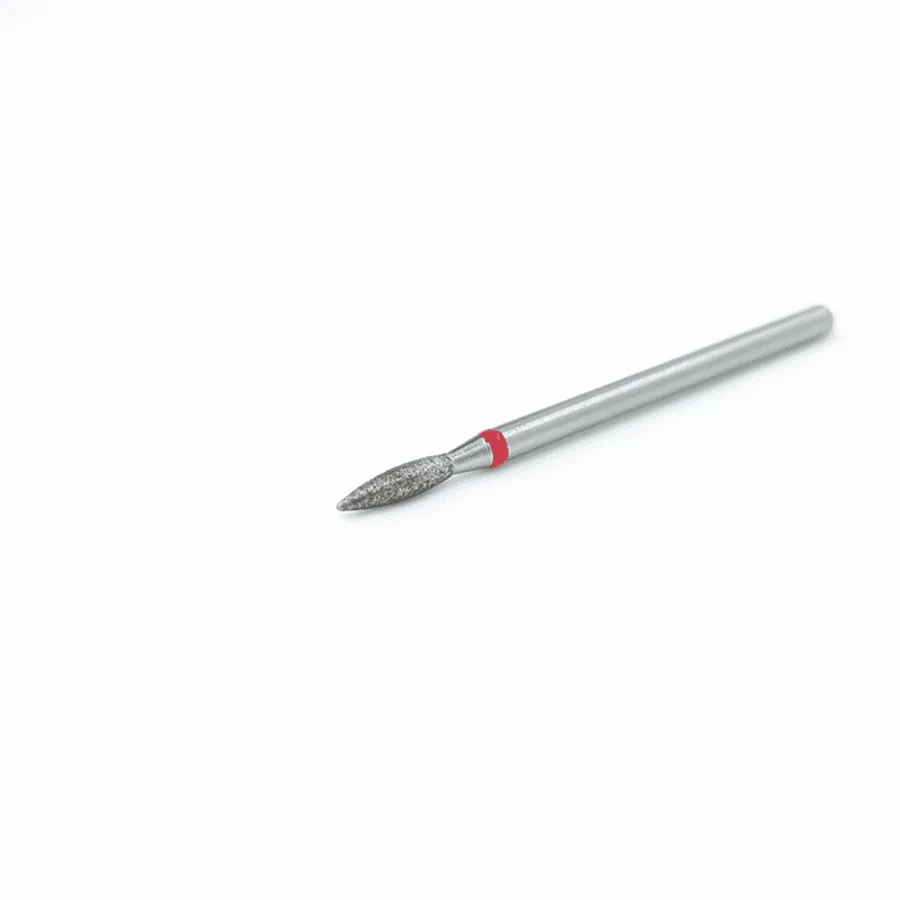
For example, a Flame E File Nail Drill Bit Size 2.1mm Red is a popular diamond option for working neatly around the cuticle zone, while a Carbide E File Nail Drill is more suited to removing product efficiently.
What the main bit shapes are used for
Different shapes are made to reach different areas and produce different results. This is why shape matters just as much as grit.
Flame bits
Flame bits are one of the most versatile shapes for manicure work. Their tapered profile helps reach the sinus, lift the cuticle gently, and clean sidewalls with precision. They are often a first-choice bit for dry manicure preparation.
You can see this shape in our Flame E File Nail Drill Bit Size 2.1mm Red and Blue Flame E File Nail Drill Bit.
Ball bits
Ball bits are commonly used after cuticle lifting to help remove loose non-living tissue and tidy the cuticle area. They are especially useful for finishing work cleanly after prep.
If you want a clear example, our Ball E File Nail Drill Bit Size 4.0mm Red is designed for gentle work around cuticles and sidewalls.
Cone and rounded cone bits
Cone-shaped bits are useful for controlled surface work and for reaching tighter areas without feeling too bulky. Rounded cone shapes can feel slightly softer and more forgiving in certain manicure tasks.
Examples include the Cone E File Nail Drill Bit and the Rounded Cone E File Nail Drill Bit.
Barrel bits
Barrel shapes are often chosen for more surface-focused work, especially when you need a stable contact area. Depending on the material and grit, they can be used for refinement, smoothing, or product reduction.
See the Barrel E File Nail Drill Bit and Barrel Carbide E File Nail Drill Bit for two different approaches to that shape.
Polishing and finishing bits
Not every bit is for removal or prep. Some are designed for refining and finishing. Polishing bits help smooth the surface and are useful when you want a clean final finish without overworking the nail.
For that kind of finishing work, take a look at the Polishing E File Nail Drill Bit or Stone Polishing E File Drill Bit.
Grit colour matters
Many professional nail techs use grit colour as a quick reference point. Although exact grading can vary by manufacturer, the colour ring generally helps indicate how soft or aggressive a bit is.
Softer grit is usually preferred for delicate manicure work, especially around the cuticle area. More aggressive grit should be reserved for tasks that genuinely require it, such as removing product or working on harder material.
This is one reason it is so important not to treat all bits as interchangeable. A flame shape in a soft grit and a carbide barrel for removal may both fit the same handpiece, but they are made for completely different jobs.
Choosing the right bit for the service
A simple way to choose the right bit is to start with the service itself.
If you are doing manicure prep, focus on diamond bits that give you control and visibility around the cuticle area. If you are removing enhancement material, look at carbide options that are made for that purpose. If you are refining the final surface, polishing bits make more sense than aggressive removal bits.
Many nail techs build their working set gradually rather than buying everything at once. A practical starter selection often includes:
- a flame bit for prep work
- a ball bit for cuticle finishing
- a cone or rounded cone bit for controlled detailing
- a carbide bit for product removal
- a polishing bit for final refinement
If you want to build a versatile professional set, our Most Essential 20 E File Nail Drill Bits Set For the Manicure And Pedicure is a good place to explore a broader range of shapes in one collection.
Final thoughts
Understanding e-file bits is really about understanding purpose. The right bit should make the service cleaner, safer, and more controlled. The wrong bit usually creates more pressure, less precision, and more risk of overworking the area.
If you are still building confidence, start with the basic shapes, learn what each one is meant to do, and work with professional-quality bits you can rely on. You can browse our full shop or start with some of the most commonly used professional shapes linked above.